




YOUR
NATURAL
PROTECTION
Respiratory infections facts
A wide variety of pathogens
COLD AND NASOPHARYNGITIS
Incidence: 1 to 4/year (Meneghetti et al., 2020)
INFLUENZA
Each year, an average of a billion people worldwide get infected with the influenza virus, of which 3-5 million are severe cases. Unfortunately 290,000 to 650,000 end fatally (WHO, 2019).
COVID-19
More than 232 million positive COVID cases, with over 4.7 million having a fatal outcome (WHO, September 2021).
Multtiplicity of clinical manifestations
At least 1 in 5 COVID-19 infected persons suffer from a long-term post-covid syndrome, characterized by persistent weakness with various pathological manifestations after the acute infection stage (WHO, 2021).
Source: WHO, 2021
Numerous infection situations
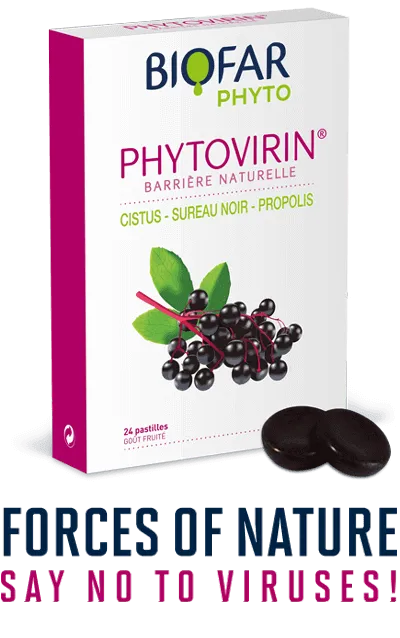
Discover Phytovirin Pastilles

With their specific formula, PHYTOVIRIN® pastilles
- protect the organism from viruses and bacteria
- maintain the health of the bronchi and respiratory tract
- support the natural defences
- help soothe a sore throat
- contribute to fatigue reduction
| Nutritional composition | Per 6 pastilles | RI* |
|---|---|---|
| Pink rock rose extract (Cistus incanus) |
480 mg | – |
| Propolis extract | 420 mg | – |
| Black elderberry extract (Sambucus nigra) |
240 mg | – |
| Ginger extract (Zingiber officinale) |
150 mg | – |
| Eleutherococcus extract (Eleutherococcus senticosus) |
150 mg | – |
| Vitamin C (Ester-C®) | 120 mg | 150% |
| Vitamin D3 | 10 μg | 200% |
| Zinc | 9 mg | 90% |
Natural barrier
It is known that highly molecular tannins from certain plants are not absorbed in the mouth, but form a protective film in the oral cavity mucosa and pharynx, preventing the adhesion of bacteria and viruses to the cells.
This blocks the penetration and replication of the virus within the cells, which then degrades the pathogens.
This protective natural barrier thus protects the organism from potential infections, as cold and flu.
Mechanism of action
Synergistic active ingredients

Pink rock rose extract
(Cistus incanus)
Cistus is an evergreen dwarf shrub herb in the family Cistaceae. It’s native to the arid Mediterranean region, where plants endure harsh growing conditions (drought, high temperatures and sun exposure …). Hence, Mediterranean plants produce high levels of polyphenols to protect them against natural stressors and Cistus incanus exhibits one of the highest polyphenol content of any plant in Europe. Thus, it was traditionally used to treat colds, coughs, menstrual problems, and rheumatism.
The specific extraction process of the exclusive cistus extract as employed by Biofar, guarantees the preservation of plant active ingredients and a higher concentration of polyphenols (+ 65%).
Scientifical investigations and clinical trials have proven the interest of cistus for its:
NATURAL BARRIER PROPERTIES
The highly molecular tannins of the cistus extract are not reabsorbed and form a protective film in the pharyngo-oral cavity, which prevents the reproduction of microorganisms such as viruses and bacteria, before an on-setting infection even has a chance.
ANTIVIRAL EFFECTS
Cistus extract inhibits viral proliferation and targets viral envelope proteins, preventing their binding in the host cells for many viruses, notably implied in respiratory infections.
Antibacterial effects
Its polyphenols help reduce both bacterial concentration and colonisation, notably by alteration of the microorganisms pellicle ultrastructure.

Black elderberry EXTRACT
(Sambucus nigra)
European elder (Sambucus nigra) is traditionally used as a medicinal plant, in order to treat bronchitis, upper respiratory infections, and fever. Numerous recognised textbooks and monographs have described its medicinal use. Thus in 2002, World Health Organization published a monograph which stated that the descriptions in pharmacopoeias and traditional systems of medicine justify its use as a complementary treatment for fever, chills, mild inflammation of the upper respiratory tract and common cold.
This standardised and highly concentrated black elderberry extract (64:1) originates from a solvent free specific process, ensuring the preservation of active substances.
Scientifical investigations and clinical trials have proven the interest of black elderberry for its:
Immuno modulatory effects
Elderberry extract notably acts on the immunomodulation, by modulating the release of cytokines such as IL-6, IL-8, and TNF.
Antibacterial effects
Elderberry extract inhibits the growth and the propagation of multiple bacterial strains, including streptococci and other pathogens, notably implied in nosocomial infections.
Antiviral effects
Its intake emerges as a potential prophylactic treatment to inhibit viral infectivity, by preventing viral binding to target cells and promoting degradation of virion structure, including in case of respiratory infection agents.

Eleutherococcus extract
(Eleutherococcus senticosus)
Eleutherococcus senticosus, also called Siberian ginseng, belongs to Araliaceae family. It has been used as an ancient medicinal plant for many years in different traditional medical systems, as a natural: ergogenic, anti-fatigue, anti-inflammatory, antitumoral, anti-anxiety, anti-depression, antidiabetes, cardioprotector, neuroprotector, hepatoprotector and immunoregulator.
The content of active substances can considerably vary from one product to another. Standardisation of extracts is therefore imperative, as for the exclusive highly concentrated fresh plant extract used by Biofar.
Scientific investigations and clinical trials have proven the interest of eleutherococcus for its:
ANTIVIRAL EFFECTS
Eleutherococcus extract exerts direct antiviral effects, notably by inhibition of virus binding and termination of viral cycle in host-cells.
IMMUNOMODULATORY EFFECTS
This plant extract increases immune response:
expression of defensins, pathogen pattern recognition, interferon, cytokine release, activation of natural killer cells, lymphocytes and phagocytic activity.
ERGOGENIC AND INFECTION PREVENTION EFFECTS
This ergogenic plant acts on energy, reduces fatigue and improves the organism resistance against environmental stressors. Its preventive intake has been shown to significantly lower outcomes and morbidity in a population at risk, in a collective environment.

Propolis extract
Propolis, or bee glue, is a natural wax-like resinous substance found in hives, where it is used as cement and to seal cracks or open spaces. The majority of these compounds are forms of protective polyphenols (specifically flavonoids). The ancient Greeks, Romans, and Egyptians were aware of the healing properties of propolis. Hence, it has been extensively used in traditional medicine, notably in treatment of: dermatological, laryngological, gynecological or degenerative impairments, wounds, burns and ulcers.
This genuinely patented extract is highly purified and concentrated in active substances. It has seen its rich phenolic complex investigated by multiple scientific studies.
Scientifical investigations and clinical trials have proven the interest of propolis for its:
Antioxidant and Immunomodulatory effects
This exclusive extract has demonstrated its antioxidant and immunomodulatory properties. It notably acts on cytokine production and on the activity of macrophages.
Antibacterial effects
Propolis exerts direct antibacterial effects on a large spectrum of germs (including antibiotics-resistant strains) responsible for respiratory, digestive, urinary and oral infections. It notably contributes to prevent biofilm formation and bacterial proliferation, with efficiency comparable to laser diodes and chlorhexidine. Propolis does not affect Lactobacillus gassieri and Lactobacillus acidophilus, which are part of the commensal microbiota.
Antiviral effects
The constituents of its phenolic complex exert direct virucidal effect on numerous viruses, with a great efficiency as preventive treatment of the host-cells.
Ginger EXTRACT
(Zingiber officinale)
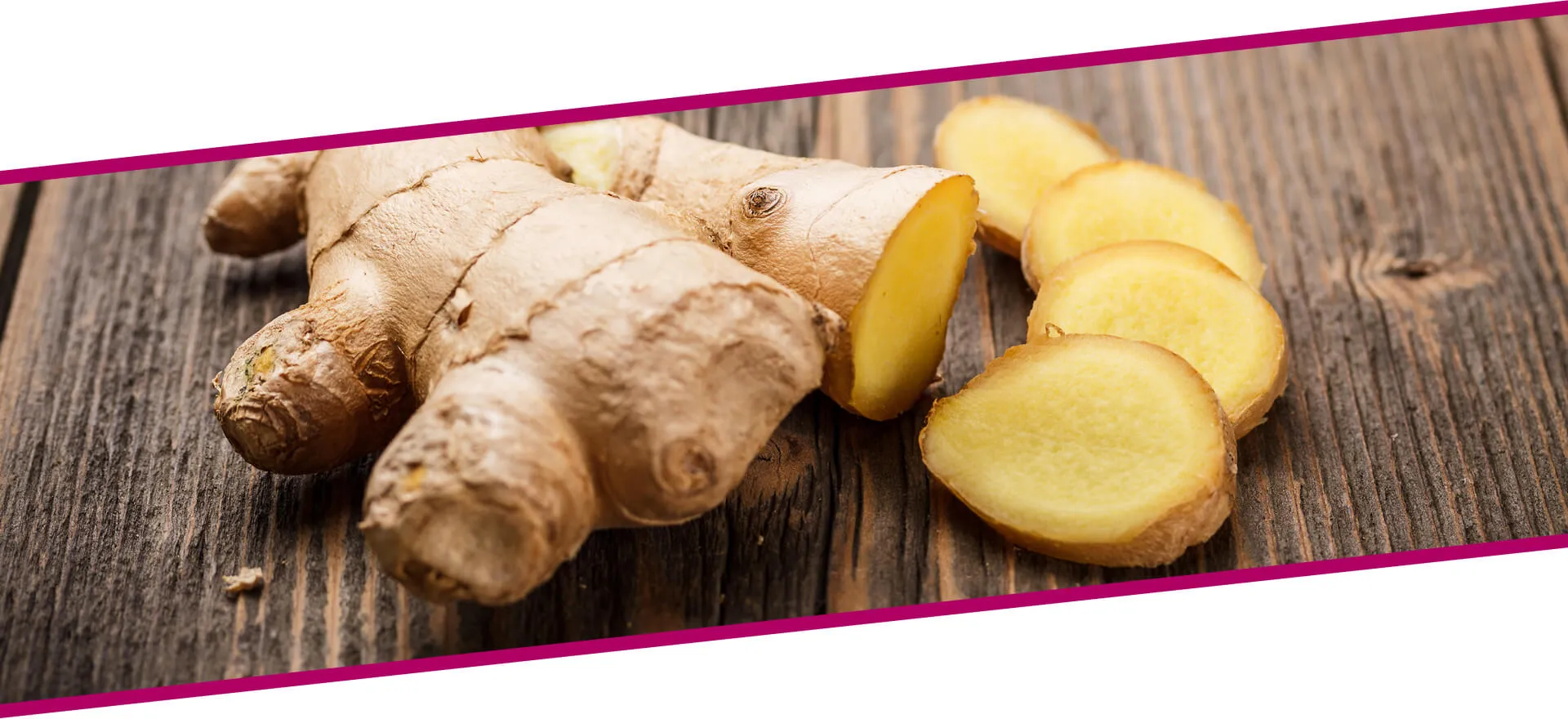
Ginger is a member of a plant family that includes cardamom and turmeric. The rhizome, which is the horizontal stem from which the roots grow, is the main portion of ginger that is consumed and used as a spice or remedy in traditional medicine. Notably as: tonic for the memory and digestive system, opener of hepatic obstructions, aphrodisiac, stomach, intestine and throat reliever.
The use of a fresh ginger extract ensures a higher concentration and a better preservation of active substances: antioxidants, ketones, especially the gingerols, which appear to be the primary component of ginger studied in much of the health-related scientific research.
Scientifical investigations and clinical trials have proven the interest of ginger for its:
Immunomodulatory effects
Ginger positively impacts immune system and antibodies response: lymphocytes, neutrophils, IgM, RBC, hemoglobin and thyroid stimulating hormone concentrations.
Antibacterial effects
Its strong direct antibacterial efficacy has been proven on a large spectrum of germs, including those infecting the respiratory system.
Antiviral effects
Inhibits the penetration of the virus into its host cell. This extract inhibits respiratory viruses, when administered before exposure.

Vitamin D
(Cholecalciferol)
Before the twentieth century, it was not possible to describe the essentials of a diet that could support life, growth and reproduction. Although vitamin D deficiency was recognised as responsible of rickets and osteomalacia in the early 1600's, it was only a century ago that vitamin D was discovered. This discovery was made difficult by the fact that this compound is synthesised in human skin by exposure to UV light and is also present in the diet in animal (D3) and plant (D2) derived forms.
While both types help to meet our requirements, they differ in a few important ways. Numerous studies according that vitamin D2 (ergocalciferol) is less effective than vitamin D3 (cholecalciferol) at raising blood levels of vitamin D.
Scientifical investigations and clinical trials have proven the interest of vitamin D for its:
Immunomodulatory effects
Systemic or locally produced vitamin D are known for their beneficial effects on several immune-cell types (macrophages, dendritic cells (DCs), T and B cells...) and on microbiome.
Antimicrobial effects
Vitamin D promotes the differentiation of monocytes into macrophages and ultimately induces the synthesis of cathelicidin; a natural antimicrobial which inhibits bacteria (as Mycobacterium tuberculosis) and viruses (including SARS-CoV-2).
Preventive effects
Vitamin D deficiency is known to induce immune impairment and is correlated to higher infection rate. Its adequate intake is correlated with reduced infection risk, disease severity and mortality, notably in COVID-19.


The better Vitamin C
In 1928, a substance, called "hexuronic acid", has been isolated from adrenal glands. British chemist Walter Haworth determines its molecular structure and renames it ascorbic acid, known today as vitamin C. Many scientists, notably another Nobel Prize, Linus Pauling, have worked on its use in order to enhance immunity, prevent and cure many diseases and disorders.
Ester-C® is a clinically tested patented vitamin C which exhibits rapid absorption and maximum retention for 24 hours in immune cells. Its neutral pH contributes to its great digestive tolerance.
Scientifical investigations and clinical trials have proven the interest of vitamin C for its:
Immunomodulatory effects
Vitamin C is well known for its positive impact on the immune system, notably by accumulation, regulation and stimulation mechanisms on macrophages, neutrophils and leukocytes cells. Hence, this vitamin can enhance chemotaxis, phagocytosis, antioxidation, microbial killing, apoptosis … In addition, Ester-C® vitamin C exhibits long-lasting effect in the leukocytes.
Antibacterial effects
Ascorbic acid inhibits the replication of multiple microorganisms, including staphylococci, enterococci, candidas, pseudomonas and the biofilm formation, including that of antibiotic resistant germs.
Antiviral and preventive effects
Its intake has been shown able to prevent respiratory infections, by its immunomodulatory effects, but also by virucidal mechanisms. Vitamin C inhibits multiplication and replication of several viruses, potentially including influenza and COVID-19.
Zinc
(Bisglycinate)
Zinc has been recognised as an essential nutrient for plants and animals since the 1920’s. However, it was not until the early 1960's that human zinc deficiency was described in the Middle East. Today, zinc is known as necessary for a wide range of biochemical, immunological, and clinical functions, all affected by its deficiency: physical growth, immune competence, reproductive function, and neurobehavioral development. These facts motivate research in preventive and curative properties of zinc supplementation.
Zinc intake in bisglycinate form shows a maximal bioavailability and tolerance compared to other inorganic and organic mineral forms.
Scientifical investigations and clinical trials have proven the interest of zinc for its:
Immunomodulatory effects
Zinc is well known as a crucial nutrient for the normal development and functioning of cells that modulate non-specific and acquired immunity.
Antibacterial effects
Zinc notably acts by degradation of the bacterial membrane and by induction of oxidative stress in numerous pathogenic germs.
Antiviral and preventive effects
Zinc deficiency is clearly linked to poor immunity in both digestive and respiratory diseases. This trace element acts against viral infections in a preventive way, by enhancing immunity and also by virucidal and inhibitory mechanisms for several respiratory viruses. Therefore, zinc possesses a potential protective effect as preventive therapy of influenza and COVID-19.
How and when to use?
PHYTOVIRIN is recommended for use in the situations listed below:

Virusses & bacteria exposure

Transport travelling

Being in a meeting

Sore throat

Flu & cold seasons

WEAKENED IMMUNE SYSTEM
Biofar Phytovirin® Pastilles is a food supplement, composed of plant extracts, propolis, vitamins and minerals, to be used as part of a healthy lifestyle.
Does not replace a varied and balanced diet. Do not exceed the recommended daily dose. Keep out of reach of young children. Store below 25°C, away from moisture.
Adults: 1 pastille 6 times a day, to slowly melt in the mouth. Children from 12 years old: 1 pastille twice a day.
Sugar-free · Aspartame-free · Colour-free With a pleasant natural taste.
Ask your pharmacist or doctor for advice.
Why Biofar Phyto?
FRESH PLANTS
About us
- French laboratories created in 1999
- Specialist in bioavailable forms: effervescent tablets, pastilles, instant and orodispersible granulates
- A research and development centre with highly qualified scientific and technical teams
- Production with exclusive patented technology
- A range of more than 60 food supplements
- Leader in numerous countries, in pharmacy and medical prescription
Our values
- 25 years of experience
- Best sources of scientifically tested active ingredients
- Complete and synergistic formulae
- Enriched with exclusive absorption cofactors
- Best choice of bioavailable galenic formulations
- Targeted natural aromas for delicious fruity tastes




Contact & where to buy
You can find Biofar Phytovirin in all well-supplied pharmacies and drugstores.
On this page, you can choose how you’d like to reach us, and also see more information about our company.